Entry · Ref ODOTX2-K
What to Check After a Storm Hits Your Trees
- Posted
- 2026-11-17
- Last amended
- 2026-11-17
- Account
- @thetreeledger
When a storm rolls through, the damage it leaves behind can feel overwhelming. Trees that stood for decades may now lean at odd angles, branches litter the yard, and the roof might have taken a hit. In the first few hours after the wind dies down, it pays to know exactly what to look for. A calm, methodical walk around the property helps you spot the urgent problems first and avoid making things worse.
Start With the Big Picture
Before you step outside, take a moment to look out the window. If any tree or large limb has fallen onto the house, that is the top priority. Roof impact can cause leaks, structural damage, and even hidden problems like cracked rafters. Do not go near the damaged area until the scene is safe. If the roof is breached, stay out of that room until a professional checks it.
Next, scan for power lines. A fallen tree or hanging limb that touches a line is an extreme hazard. Even if the line looks low or broken, treat it as live. Stay at least 30 feet away and call the utility company immediately. Never try to move a branch that is tangled in a power line yourself. This is a job for the utility crew or a qualified line clearance specialist.
Once you are sure the house and utility lines are clear, you can step outside for a closer look. Wear sturdy shoes and stay on solid ground. Avoid walking under damaged trees, especially if the wind is still gusting. A limb that looks stable may fall without warning.
Checklist for the Yard
Work through these five points in order. Each one helps you decide what needs emergency tree service and what can wait until morning.
- Look for a split trunk. A tree that has a visible crack running down the trunk is structurally compromised. Even if the tree is still standing, a split trunk means the two halves may pull apart in the next breeze. This is a candidate for immediate removal, especially if the tree is close to the house or driveway.
- Search for hanging limbs. A limb that is caught in the canopy above, dangling by a strip of bark, is a widowmaker. It can drop without warning. Mark the area below it as off-limits and call a tree service to bring it down safely.
- Check the driveway and walkways. A blocked driveway keeps you from getting in or out. It also stops emergency vehicles from reaching the house. If a fallen tree blocks the driveway, that is a high-priority item. Same goes for paths to the front door.
- Inspect the root zone. A tree that has tilted may have pulled roots out of the ground. Look for lifted soil, exposed roots, or a lean that was not there before. A tree with root damage is unstable and may fall completely in the next storm.
- Note any debris on the roof or gutters. Leaves, twigs, and small branches can clog gutters and cause water to back up under the shingles. While this is not a safety emergency, it can lead to rot and leaks if left too long.
If you find any of these issues, write them down. A simple list helps you communicate clearly with the tree service when you call. They can bring the right equipment and crew for the job.
What to Do About a Fallen Tree
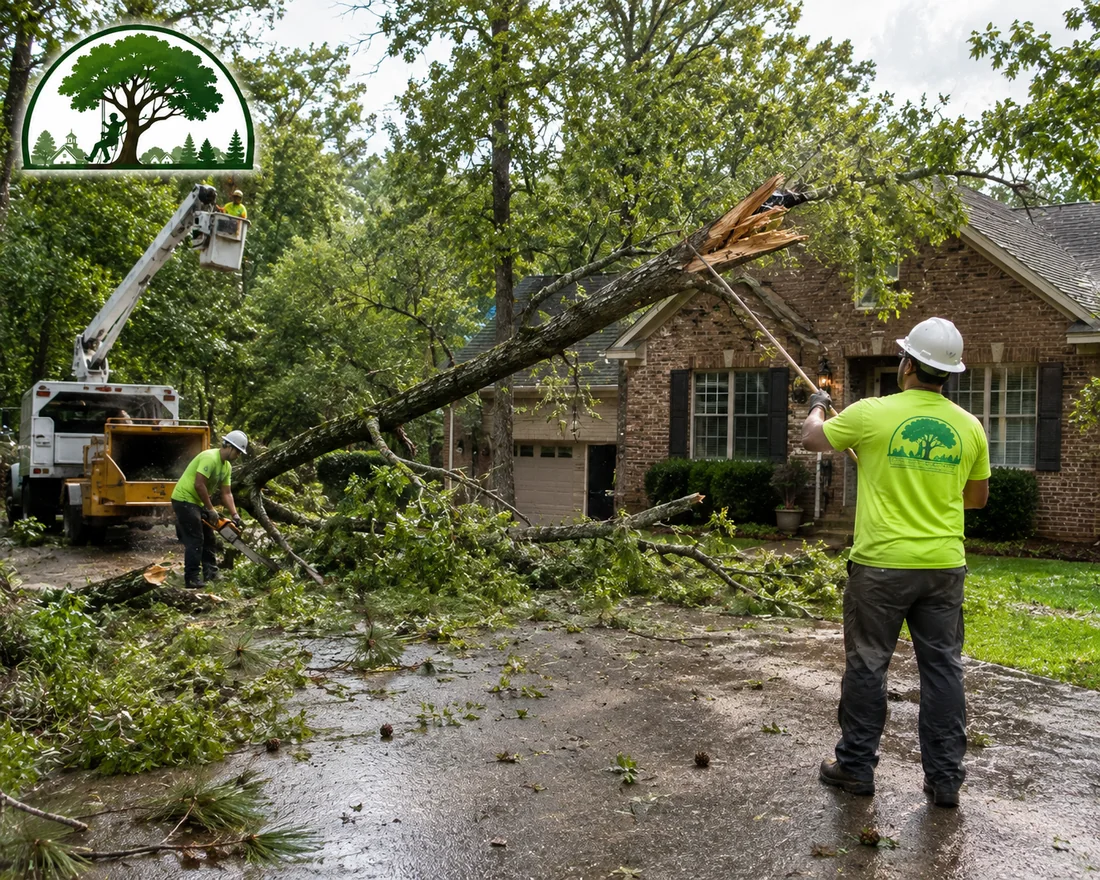
A fallen tree is often the most visible storm damage, but not every fallen tree needs the same response. If the tree is in an open part of the yard and no structure or path is blocked, it can wait a day or two. But if it has crushed a fence, landed on a car, or is resting against the house, the situation is more urgent. A tree that is leaning on the house can shift as the ground dries or as the wood dries out, causing more damage.
In those cases, the priority is site stabilization. That means securing the tree so it cannot roll or slide further. A professional tree crew will often cable or brace the tree before they start cutting. They also assess the direction of the lean and the tension in the wood. Cutting a fallen tree that is under tension can be dangerous if you do not know how the wood will spring back.
If the tree has pulled up a large root ball, the hole it leaves behind can be a hazard for kids and pets. Keep everyone away until the tree is removed and the hole is filled. The root ball itself can weigh several tons, so do not try to move it by hand.
For homeowners who need fast help after storm damage, the first call is often to a local tree service that handles emergency response. They can assess the scene and tell you what needs to happen next. Most reputable companies will come out for a look and give you a clear plan before any work starts.
When to Call a Professional
Some storm damage is straightforward. A single broken branch that you can reach from the ground with a pruning saw is something a capable homeowner can handle. But many situations call for a trained arborist with proper gear. Here are the signs that you need professional help.
- The tree is near a power line. Even if the line is not down, a branch that sways into the line can cause arcing. Only crews trained in line clearance should work near utility wires.
- The tree is large or the damage is high up. Climbing a ladder with a chainsaw is one of the most dangerous things a person can do. Professionals have climbing gear, harnesses, and experience working at height.
- The tree is under tension. A tree that is bent over or leaning heavily on another tree stores a lot of energy. Cutting the wrong part can release that energy suddenly and cause the tree to snap or kick back.
- You are not sure what is safe. If you look at the damage and feel unsure, trust that instinct. A professional can give you peace of mind and do the job right the first time.
When you call for help, describe the damage as clearly as you can. Mention if any utility lines are involved, if the tree is touching the house, and whether the driveway is blocked. That way the crew can prioritize their response and bring the right equipment.
After the Emergency Is Handled
Once the immediate dangers are taken care of, the cleanup phase begins. This can be the most time-consuming part of storm recovery. Branches and debris may cover the entire yard, and the sheer volume can be surprising. A good tree service will offer debris cleanup as part of the job, but you can also handle it yourself if you have the time and a place to take the material.
Check with your local waste management about storm debris pickup. Many cities have special collection schedules after major storms. If you have a fireplace or wood stove, seasoned hardwood branches can be cut and split for firewood. But be careful: storm-damaged wood may have hidden cracks or metal debris from fences and signs.
Also take a look at the remaining trees on your property. A storm can weaken trees that look fine at first. A tree that lost a major limb may have an imbalance in its canopy, making it more likely to fall in the next storm. An arborist can prune the remaining branches to reduce wind resistance and improve the tree's structure. This kind of preventive care is worth considering while the tree crew is already on site.
For homeowners who need fast help after storm damage, the key is to act quickly but not recklessly. The first few hours set the tone for the whole recovery. A calm, systematic approach keeps everyone safe and makes sure the most urgent problems get solved first. Once the danger is gone, you can take your time with the rest of the cleanup and plan for the next storm season.